

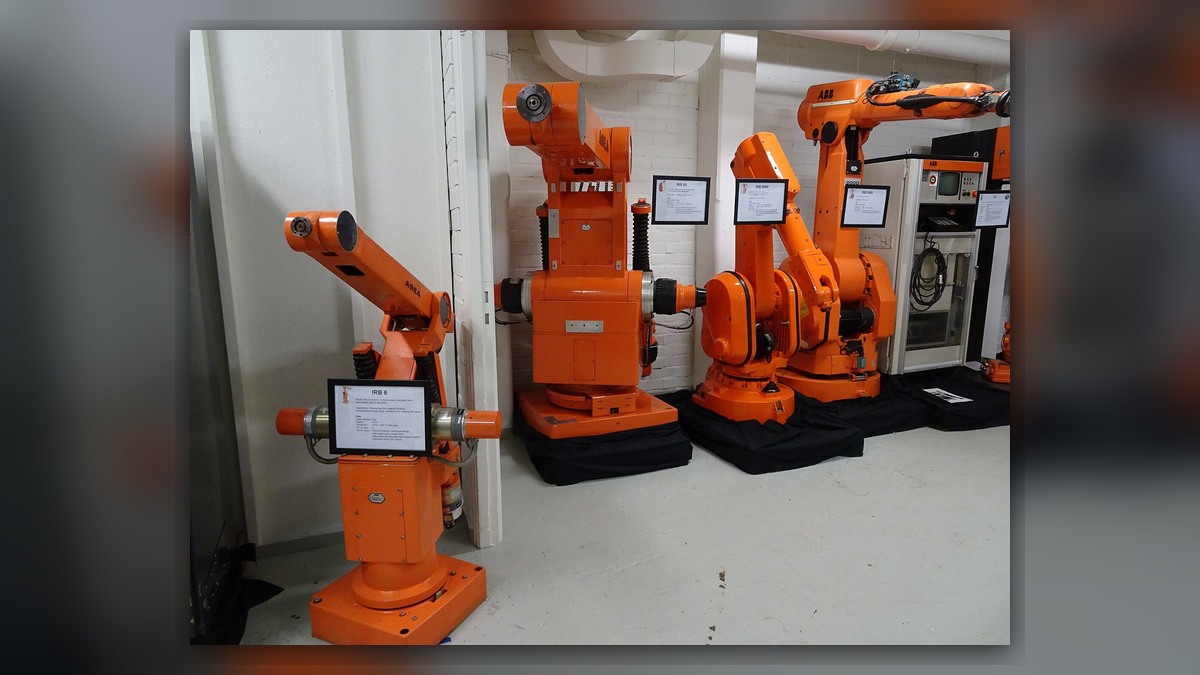
Opening answer
An ABB robot maintenance record should be closed only when the equipment identity, completed work, pre-work condition, recorded parts and consumables, unresolved observations, post-work evidence, and release decision are traceable to the same job. This does not require assuming that a symptom identifies a failed component. It requires showing what was observed, what was inspected or serviced, what remains uncertain, and why the named responsible person considers the robot suitable, unsuitable, or conditionally suitable for return to production.
Define the equipment and record boundary
Start with the robot identification available at the site. Record the manufacturer, robot designation if known, asset or serial identification if available, installation location, controller or cell reference where applicable, and the date and work-order reference. Do not fill gaps with assumptions. If an identifier cannot be confirmed, state that it is pending verification and attach the evidence used by the maintenance team.
Define whether the record covers the robot only or also connected equipment. The applicable scope may include robot-level inspection and scheduled work. It may exclude tooling, external positioners, tracks, process equipment, cell guarding, application devices, or controller work unless those items were explicitly included. A clear non-applicable statement is useful: it prevents a reviewer from interpreting an omitted inspection as a completed inspection.
Capture the pre-work condition
Before scheduled work begins, record the operating condition that led to the intervention. This may include normal operation, a planned maintenance state, an observed abnormality, a pending inspection, or an incomplete prior task. Describe symptoms without converting them into diagnoses. For example, a reported stop, noise, positional concern, visible contamination, or abnormal motion is an observation or complaint; it does not by itself establish a motor, gearbox, cable, encoder, drive, or controller failure.
Preserve the available diagnostic context. Record the affected axis or mechanism only when it was identified, the operating mode and load context when relevant, recent changes reported by production, and the time or sequence in which the observation occurred. Include photographs, inspection notes, event records, or other available evidence according to site procedures. Do not reproduce an unsafe condition merely to obtain a recording.
Document completed work and materials
The closeout record should distinguish planned work from completed work. List each inspection, cleaning activity, adjustment, replacement, repair, or other task actually performed. If a planned item was not completed, state why and identify the resulting restriction or follow-up action. Record parts and consumables used by description and traceable reference where available, without inferring compatibility from appearance or from a general ABB product family. The applicable robot manual, work instruction, and approved site procedure remain the authority for model-specific parts, materials, methods, and limits.
Record the service team’s observations during the work. Note visible conditions, looseness, contamination, damage, wear indications, unusual sound, evidence of leakage, or other findings only when observed. A clean inspection does not prove that every hidden condition is normal, and a changed symptom after maintenance does not prove that the replaced item caused the original problem.
Use reasoned diagnostic branches
For each unresolved observation, state the next branch in the reasoning. If the symptom is no longer present after the permitted work, record that the symptom was not reproduced or was absent during verification; this does not establish permanent resolution. If the symptom remains, record the affected condition and escalate according to the applicable procedure rather than assigning a component failure without evidence. If evidence is incomplete, identify the missing information and prevent release when the responsible reviewer cannot justify safe operation.
A branch may also concern scope. If the robot-level work is complete but tooling, external axes, process equipment, or cell safeguards were outside the job, record that those items were not assessed. Their non-assessment should not be represented as a successful robot acceptance result.
Verify before release
Post-work verification should match the work scope and the equipment-specific procedure. Record the checks performed, the operating state used, relevant program or task context when permitted, and the observed result. Functional evidence may include confirmation that the intended robot function was checked without an observed recurrence, but it should not be described as a universal acceptance test. Do not invent numerical limits, alarm meanings, parameter values, compatibility conclusions, or maintenance intervals when they are not confirmed by the applicable manual.
Where motion observation is necessary, it must be performed by competent staff under the equipment-specific procedure, with safeguards in place and no live electrical work or defeated protective function. A successful limited check establishes only what that check covered. It does not establish the condition of excluded equipment or future performance under every production load and sequence.
Assign the release decision
Finish with an explicit status: released, not released, or released with documented restrictions and follow-up. Name the person responsible for the decision, their role, the decision date, and the evidence reviewed. Link open actions to an owner and due date where the site system supports this. The approver should be able to distinguish completed maintenance from diagnostic uncertainty, deferred scope, and production restrictions without consulting undocumented verbal explanations.
This structure gives an ABB robot maintenance record continuity from pre-work observation to post-work decision. It also supports the broader principle that robot service should be tailored to the specific robot and application rather than treated as a one-size-fits-all activity. A traceable closeout record is therefore not merely an administrative form; it is the evidence that defines what was checked, what was not checked, and who authorized the next operating state.
Cover adapted from original image by Dependability (CC BY-SA 4.0; source and attribution)
