
FANUC America used its October 2026 FABTECH preview to outline paint automation alongside welding, laser processing and other fabrication applications. Two relevant examples of FANUC paint robots are the P-55/15-21A with line tracking and the CRX-10iA/L Paint model with Scan-to-Path and No Code programming. This report summarizes the announced demonstrations and the questions they raise for existing paint operations.
Line tracking for parts that keep moving
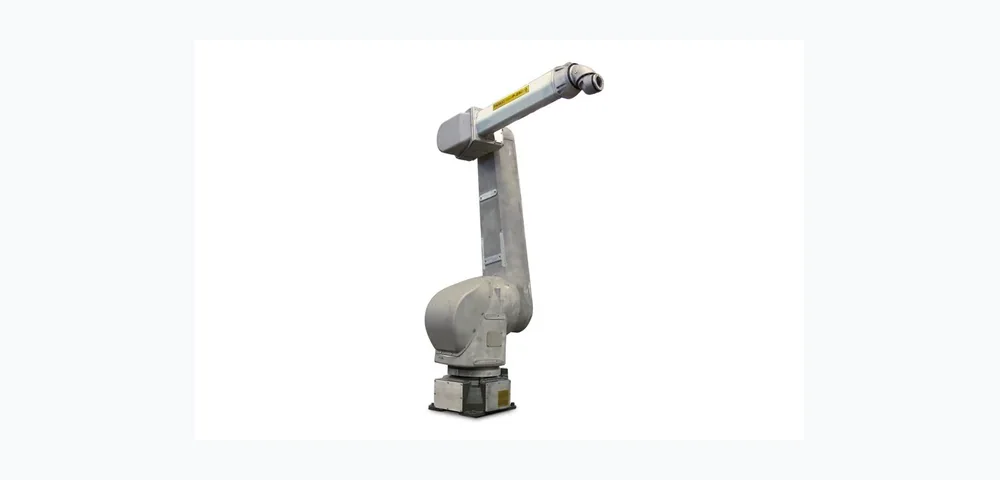
The preview describes a P-55/15-21A paint robot with a 2,100 mm reach, integrated line tracking and a VersaBell 3 applicator. Its planned demonstration paints moving football helmets. That application links robot motion with part position and coating delivery, rather than treating the robot path as an isolated task.
The published reach and equipment combination refer to that specific configuration. A different workpiece still requires review of geometry, fixtures, conveyor motion, coating requirements and the installed working envelope. Reach alone does not determine whether a complete painting system fits a production line.
Collaborative paint robots and product changeovers
FANUC also describes the CRX-10iA/L Paint model with a 10 kg payload and 1,418 mm reach. The announcement connects its Scan-to-Path and No Code capabilities with finishing operations that change products frequently. This is a different planning problem from coating a continuous flow of identical parts.
Simpler path preparation still leaves process work to do. The applicator, paint supply, tool frame, workpiece recognition and cleaning sequence must fit the task. Check the documentation for the complete installed configuration when assessing environmental requirements. A product-level feature should not be extended to unrelated equipment.
What can factory teams learn from this announcement?
The two examples suggest useful questions for automatic spray painting projects. Is the main challenge tracking a moving part, or preparing paths for frequent changeovers? Which work belongs to the robot controller, and which belongs to the coating and conveying equipment? Define that problem before comparing the proposed hardware.
A faster spray movement does not necessarily increase accepted parts per hour. Loading, color changes, cleaning, drying and rework may constrain output. Use representative workpieces and the same finish standard when comparing a proposed system with the existing process. The announcement provides technology examples, not measured results for another factory.
Suntech equipment perspective: keep motion and coating records separate
These maintenance points are editorial advice. A changed robot path and an unchanged path with a changed finish need different initial evidence. Keeping those records separate helps a service team decide whether to investigate robot motion, synchronization or the coating process.
- For motion or tracking changes, retain the first alarm, frames, conveyor feedback and recent program changes.
- For finish changes with normal motion, retain material, flow, applicator, trigger timing and environmental records.
- Before replacing a component, check robot, controller and process interfaces, and keep a backup of the original parameters.
Source date and related technical reading
The FANUC page labels publication as October 2, 2026, while its release dateline says October 5. This article refers to the October announcement and was compiled on November 5, 2026. The source describes planned exhibits; this is not a Suntech exhibition visit or performance test.
FANUC: Automated Solutions for Welding and Painting at FABTECH 2026