

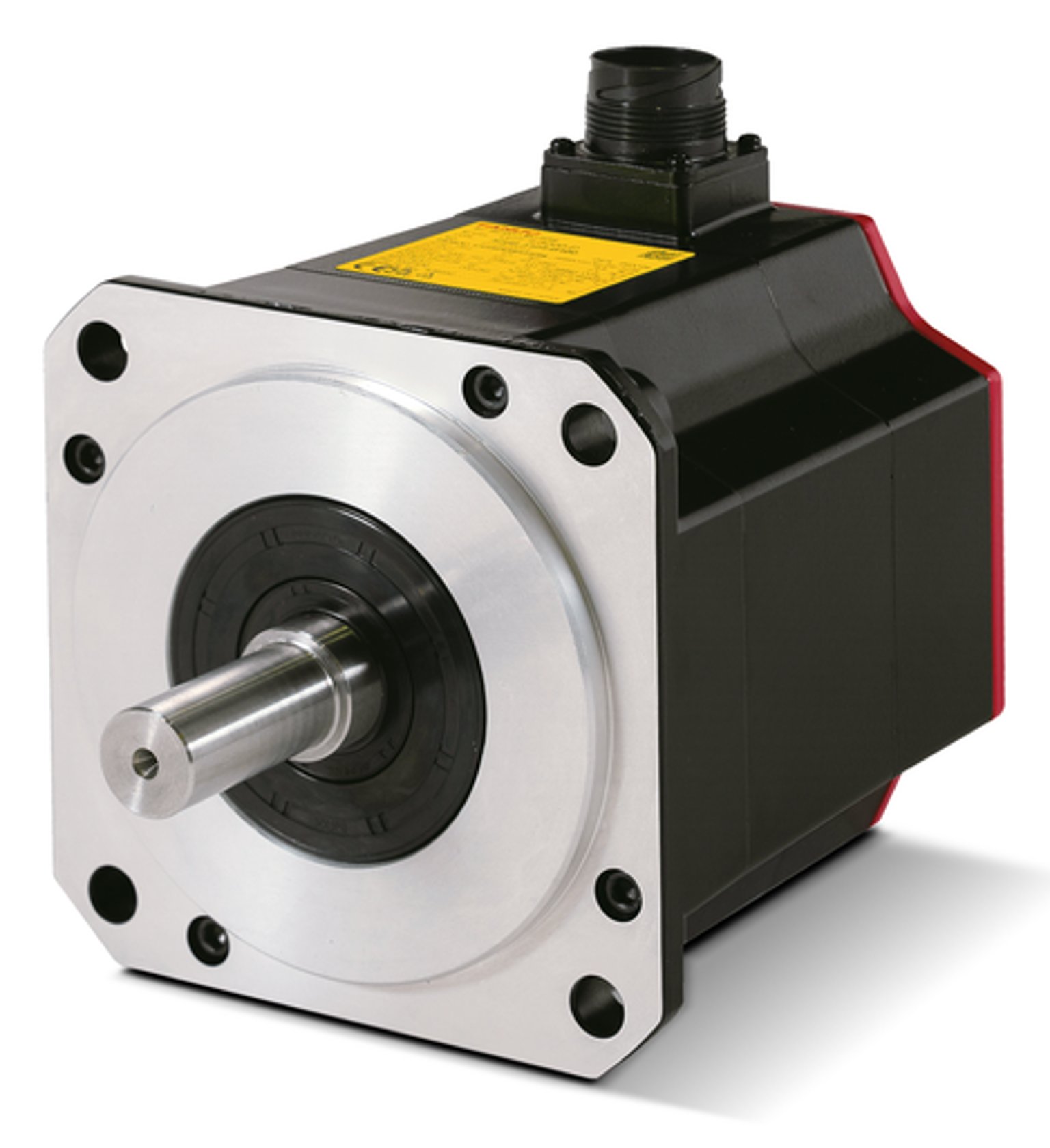
Customer problem: recurring motor bearing damage
The customer had struggled with bearing currents on one motor for some time. A photograph in the case shows fluting on the bearing race. The customer had already investigated the issue without resolving it. The source does not identify the motor, call date or a site visit.
The damaged bearing was the visible result. It did not, by itself, identify the initiating fault. A useful investigation considers the motor, cable system, grounding and inverter instead of treating every failure as a mechanical defect.
Step 1: compare operation with an identical inverter
The customer installed a new inverter from the same manufacturer and of the same model. No parameters were changed. The bearing currents disappeared, directing attention to the original inverter.
Technical guidance: record the full replacement model, settings, load, wiring and operating conditions. A comparison with several changed variables is weaker evidence. The source confirms the matching model and unchanged parameters, but does not publish every operating condition.
Step 2: check output current and the DC-bus waveform
The original repair provider’s technical manager tested the original drive and found significant common-mode currents at its output. His account ruled out the motor and cable system as the cause of that behavior and continued the investigation inside the inverter.
Oscilloscope traces showed the DC bus and one output phase. The bus had approximately 300 Hz ripple with a peak-to-peak value of about 50 V. The investigator described it as excessive, especially at minimal load. The frequency corresponds to full-wave rectification of a 50 Hz three-phase supply; frequency alone does not establish a fault.
Step 3: identify the abnormal bus capacitors
A check of the bus capacitors found high equivalent series resistance, or ESR. Together with the excessive ripple and the replacement comparison, this provided component-level evidence of inverter capacitor failure associated with the bearing-current problem.
Technical guidance: assess capacitors against their specifications and test conditions. Relevant information includes capacitance, ESR, connections and cooling. A normal-looking case is not proof of electrical health. The source does not publish capacitor part numbers, capacitance readings or ESR values. Its 50 V observation is not a universal drive limit. Bus measurements require equipment-appropriate procedures and instruments.
Treatment and the result actually reported
The confirmed intervention was replacement of the inverter with an identical model, after which the bearing currents disappeared. Tests on the removed unit found common-mode current, abnormal ripple and degraded bus capacitors.
The account does not document a subsequent capacitor replacement or a repair-and-retest sequence on the original inverter. This record therefore does not claim that a capacitor overhaul was completed and accepted. Any repair plan for that unit would require further assessment and manufacturer-specific requirements.
Additional acceptance workflow for a comparable repair
The following is Suntech’s technical guidance for planning verification, not a log of tests performed in the source case.
- Before power-up: follow the discharge procedure and check component ratings, polarity, connections, insulation and abnormal shorts.
- Controlled power-up: review startup, alarms, drive supplies and bus behavior; investigate abnormalities before continuing.
- Suitable motor test: record start, stop and permitted speed changes, including current, noise, vibration and alarms.
- Load and stability: record the agreed load, test duration, temperature behavior, bus ripple and operating state.
- Site follow-up: use suitable bearing-current checks and operating records; a turning motor alone does not verify that the initiating condition has been removed.
Handover: preserve the evidence chain
A useful repair record connects the symptom, replacement conditions, waveforms, component checks and verification results. This case informs servo motor repair investigations, but the source does not identify its motor as a servo model. Keep equipment identity separate from the general diagnostic lesson.
Technical editing: Suntech Robotics Technology Limited. Original investigation: Fletcher Moorland.
View servo motor repair services
Related reading: the refinery circuit board rush-repair record