
Automatic car painting uses controlled applicators and programmed motion to coat vehicle bodies or parts. A working system combines the painting robot, paint supply, booth, part positioning and process controls. The robot repeats an approved path; the coating, surface preparation and curing process still determine the finish.
Factory paint lines and repair-shop painting robots solve different tasks. This guide explains that distinction, the usual process stages and newer digital technologies. It also identifies the records needed when an existing system develops a motion or coating fault.
How does automatic car painting work?
The process begins before a robot sprays. Surfaces must be prepared for the specified coating, and the body or part must be located correctly. The applicator then follows a validated sequence. Gun triggering, paint flow and robot motion must stay coordinated with the workpiece.
- Prepare and position the body or component using the approved process.
- Select the program, coating and recipe for the actual vehicle or part.
- Apply the specified coating layers with controlled flow, distance and overlap.
- Flash off or cure each coating as its process requires.
- Inspect the finish and record rework before releasing the part.
These are general process stages, not one recipe for every line. Layer order, film thickness, pressure, voltage, flash-off and cure conditions depend on the paint and installed equipment. Use the relevant technical data and validated site procedure.
Factory paint lines and repair-shop robots: what differs?
| System | Typical task | What must be checked |
|---|---|---|
| Factory automotive paint line | Repeated coating of vehicle bodies or components | Conveyor or fixture location, line integration, color changes and curing |
| Repair-shop painting robot | Refinishing prepared vehicles or selected panels | Vehicle recognition, access, masking, booth layout and operator workflow |
| Digital decorative application | Applying a compatible design or contrasting color to selected areas | Coating compatibility, print-head access, design data and finish validation |
A repair-shop demonstration does not establish the performance of a factory line. A decorative print head also does not replace every primer, basecoat or clearcoat process. Compare the application and coating scope before comparing suppliers.
What equipment makes up an automated car painting system?
Automated paint systems bring together several systems. The painting robot carries or positions the applicator. Pumps and fluid controls supply the coating. Fixtures or conveyors establish part position. The booth and curing process provide the conditions needed for the specified finish.
| Equipment | Role | Evidence to retain when quality changes |
|---|---|---|
| Robot, controller and position feedback | Repeat the validated path and application distance | Program version, tool frame, alarms and affected poses |
| Spray gun or rotary applicator | Apply and atomize the selected coating | Applicator model, spray condition and approved settings |
| Paint supply and mixing equipment | Deliver suitable material at the required condition | Recipe, flow history, material batch and color-change record |
| Part handling, booth and curing | Maintain position and the required process environment | Fixture condition, line timing and process records |
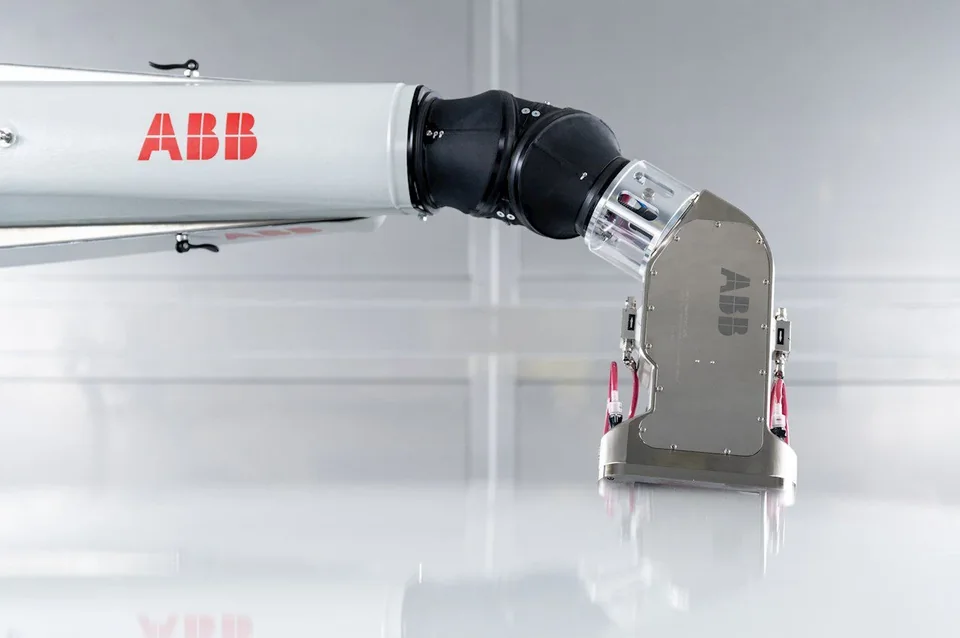
For equipment examples, see FANUC painting robots and automated paint systems. Its application page covers painting and other finishing processes; the exact robot and coating configuration still need selection.
For system types and fault isolation, use the automatic spray painting systems guide.
Which painting robot and applicator fit the job?
Choose a robotic painting machine for the workpiece and process. Check reach, access to recessed surfaces, fixture layout and the complete applicator load. Confirm the installed configuration, hoses and process equipment with the relevant supplier.
A spray paint robot describes an application, not a guarantee of coating compatibility. A handheld sprayer, a general-purpose arm and a configured industrial paint robot are different products. Review the equipment requirements for the intended coating environment before integration.
Graco’s paint automation equipment overview illustrates why guns, mixing and supply equipment must be evaluated alongside robot motion.
What changes with digital paint application?
Conventional spraying atomizes coating into droplets and controls the resulting pattern. Digital application instead places compatible material at selected locations. These approaches have different process limits and should not be treated as interchangeable.
Dürr describes EcoNextJet as a robot-mounted print head with individually controlled nozzles. Software coordinates the robot path and drop placement. Dürr identifies Axalta and XAAR as development partners for coating and print-head technology.
This is relevant to contrasting colors and decorative designs on suitable surfaces. Ask which coatings, geometries and finish requirements have been validated. A precise graphic demonstration does not establish the result for a different paint system or production line.
How do AI and simulation support automotive painting?
Inspection and production data can help a team investigate repeated defects. An alert, a proposed cause and an automatic setting change are separate capabilities. When assessing a tool, ask which measurements support its conclusion and who approves a process change.
Offline simulation helps engineers assess access, paths and sequence timing before a production trial. Its output depends on the robot, fixture and workpiece models. Physical trials still need to confirm coating coverage, finish quality and actual line output.
ABB’s Painting PowerPac product document gives a manufacturer example of paint-cell simulation. Check availability and version compatibility for the installed controller.
What affects automatic car painting cost and output?
Compare the full installed scope, not just the arm price. Relevant items include the robot, applicator, booth, supply system, fixtures, controls, integration and training. Running costs include coating, cleaning, maintenance, labor, energy and rework. There is no useful universal price without that scope.
State whether output includes loading, spraying, color changes, cleaning and curing. A faster spray pass does not increase output when another stage limits the line. Compare accepted parts per hour under the same product mix and finish standard.
Use the separate automatic spray painting benefits and payback guide for a trial checklist and cost comparison.
What should be recorded before painting robot maintenance?
Separate motion faults from coating defects. If the path or position changes, retain alarms, tool and work frames, program changes and affected poses. If motion is normal but the finish changes, compare material, flow, applicator, trigger timing and booth conditions.
- Record robot, controller, applicator and supply-system models.
- Keep the first alarm, defect photos and the time each problem started.
- List recent changes to the coating, recipe, fixture, program or hardware.
- Identify which checks can be done on a component and which require the original cell.
For robot-side assessment, see painting robot inspection and repair and send the model, fault records and application conditions before agreeing the scope.
Questions before adopting new automatic car painting technology
- Does the demonstration use representative vehicle geometry and the specified coating?
- Does the measured cycle include the actual loading and changeover work?
- Which inspection standard defines an accepted finish?
- Who maintains programs, process settings and replacement-part records?
- Which checks remain necessary after installation or repair?
Keep the technology decision tied to a measurable production problem. Compare conventional robotic painting systems, targeted upgrades and newer digital application using the same acceptance conditions. Manufacturer examples describe those products; they are not Suntech installation or repair case studies.