
Automatic spray painting can give parts a more even coat, reduce paint waste and help teams plan output. It also takes on repeated spraying tasks. The gains depend on the parts, paint and full line. A robot alone does not ensure a better finish.
Use this guide to evaluate benefits and costs against a defined production trial. For equipment types and fault diagnosis, start with the automatic spray painting systems guide. An automatic line is not always the best next investment.
Compare layouts in the automatic spray painting systems guide before estimating the benefit of a particular machine.
What advantages can automatic spray painting offer?
- More even coats: the machine repeats the same approved path and spray settings.
- Less wasted paint: the gun starts and stops at set points.
- Steadier output: saved programs help teams repeat a job.
- New roles for staff: people focus on loading, checks and service.
- Clearer fault records: teams can compare settings, defects and stops.
Graco discusses quality, cost, waste and staffing as reasons to assess automation. Check these claims against your own line. Read Graco’s paint automation overview.
More even finishes with automated spray painting
Automated spray painting helps keep gun distance, travel speed and overlap steady. Fixtures hold each part in a known place. These controls help a spray painting robot follow the right path.
Spray patterns describe the shape and spread of the spray. Check the fan shape, nozzle wear and overlap on a test part. Poor setup can leave dry areas, runs or uneven film thickness.
Precise controls help produce professional finishes when the whole process is stable. Clean parts, suitable paint, airflow and curing still matter. Set a finish standard before the trial. Count how many parts pass without rework.
Reduce paint waste: measure use per good part
Stable paint flow helps the gun apply the right amount. Too much flow can cause runs or extra waste. Too little can leave thin areas. Set flow, speed and gun distance together for the coating and part.
Use this measure to compare trials:
Paint per good part = total paint used / number of good parts.
Record the unit, such as liters per part. Count paint used on scrap and rework too. Track cleaning fluid on its own. Keep the same part mix and finish standard in both trials.
How gun control contributes to repeatable coating
An automatic spray painting gun starts and stops with the machine. Choose spray guns that suit the paint, part shape and line speed. Check the nozzle, fluid limits and cleaning steps for the exact model.
Atomization means breaking liquid paint into fine drops. The gun type and setup affect these drops. An automatic trigger does not tell you which spray method the gun uses. Ask for the model data and a trial with your coating.
For model choices, see SATA automatic paint spray guns.
Why the benefit depends on the whole paint line
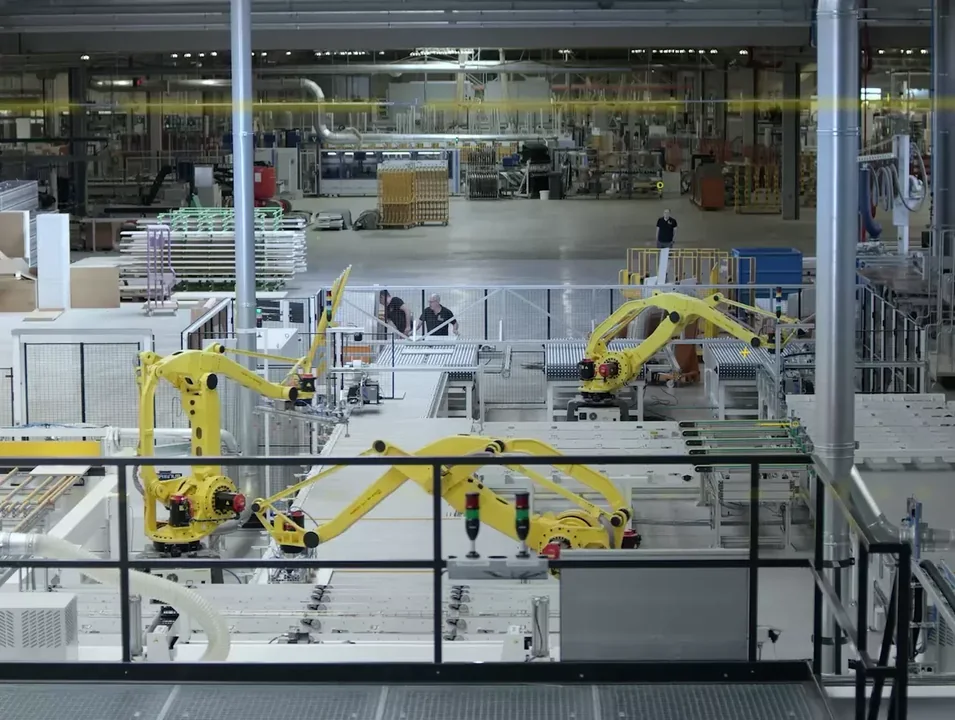
An automatic painting machine may use fixed guns, a moving arm or robotic arms. Choose the layout for the work. Flat panels and complex parts may need different painting applications and paths.
Automated paint spray systems link guns, pumps, fluid controls and part handling. Check who supplies the booth, fixtures and curing stage. Confirm the site’s ventilation and fire-safety needs before choosing a system.
For examples of fluid and application equipment, see Graco automated paint systems.
Check cycle time and actual output
An automatic spray painting machine can repeat a set work cycle. Cycle time is the time for one defined cycle. State whether it includes loading, spraying and unloading. Keep color changes and cleaning in the production plan.
A faster spray pass may not raise line output. Check whether loading or curing sets the pace. Compare good parts per hour and log stops. For high volume work, test a full run as well as a short demo.
Which measurements show a useful improvement?
| Benefit | Check first | Measure |
|---|---|---|
| More even finish | Part position, spray pattern and paint settings | Good parts without rework |
| Less paint waste | Flow, trigger timing and cleaning | Liters used per good part |
| Steadier output | Loading, spray cycle and curing | Good parts per hour and stop time |
| Easier upkeep | Access, spare parts and staff skills | Service time and repeat faults |
Ask for a trial of the automatic spray painting equipment on your parts. A test on another product may show how the machine works. It does not prove the same result on your line.
When might a smaller upgrade be a better choice?
| Constraint | Option to investigate | What to measure |
|---|---|---|
| Fixture movement causes inconsistent presentation | Correct the fixture and validate the existing path | Finish consistency on repeated parts |
| Color changes dominate available time | Review cleaning and recipe handling | Changeover duration and material used |
| Curing or loading limits output | Review the limiting stage before adding spray speed | Accepted output across the complete cycle |
| Low volume with many part changes | Compare targeted gun or handling improvements with a full line | Setup work, run duration and total operating cost |
The table identifies investigation options, not confirmed causes on a particular installation. Use observations from the actual line to decide whether a robot, applicator, fixture or process change addresses the constraint.
Compare costs and payback
Include the machine, fixtures, site work, setup and training in the project cost. Add paint, cleaning fluid, energy, labor and service to annual running costs. Use the same output target for both options.
Annual net savings = current annual running cost − proposed annual running cost.
Simple payback in years = total installed cost / positive annual net savings.
For example, use years of savings to recover the one-time project cost. If savings are zero or negative, this formula gives no positive payback. It also leaves out finance costs and the timing of cash flows.
Plan a useful production trial
- Use your actual parts and coating, including hard-to-reach surfaces.
- Agree on film thickness, finish checks and curing needs.
- Measure paint use, good output, rework and stop time.
- Test color changes and cleaning, not just steady spraying.
- Confirm training, spare parts and who signs off the result.
Compare automated solutions with a smaller upgrade too. A new fixture or gun may solve the main problem. Frequent job changes or low volume can limit the value of a full line.
Next steps for an existing painting robot cell
For industrial painting faults, first find which part of the line needs work. Record the robot and controller models, exact alarms and visible defects. Separate robot faults from paint, gun, booth or curing issues.
For system types and fault checks, read our automatic spray painting guide.
For robot-side faults, see painting robot inspection and repair.
Share your model details and fault records when you contact the Suntech service team.